Services
Turf and lawns in Hobart
A lawn is only ever as good as what is underneath it. Most lawns that go patchy were laid onto ground that was never prepared, and you cannot fix that from the top.
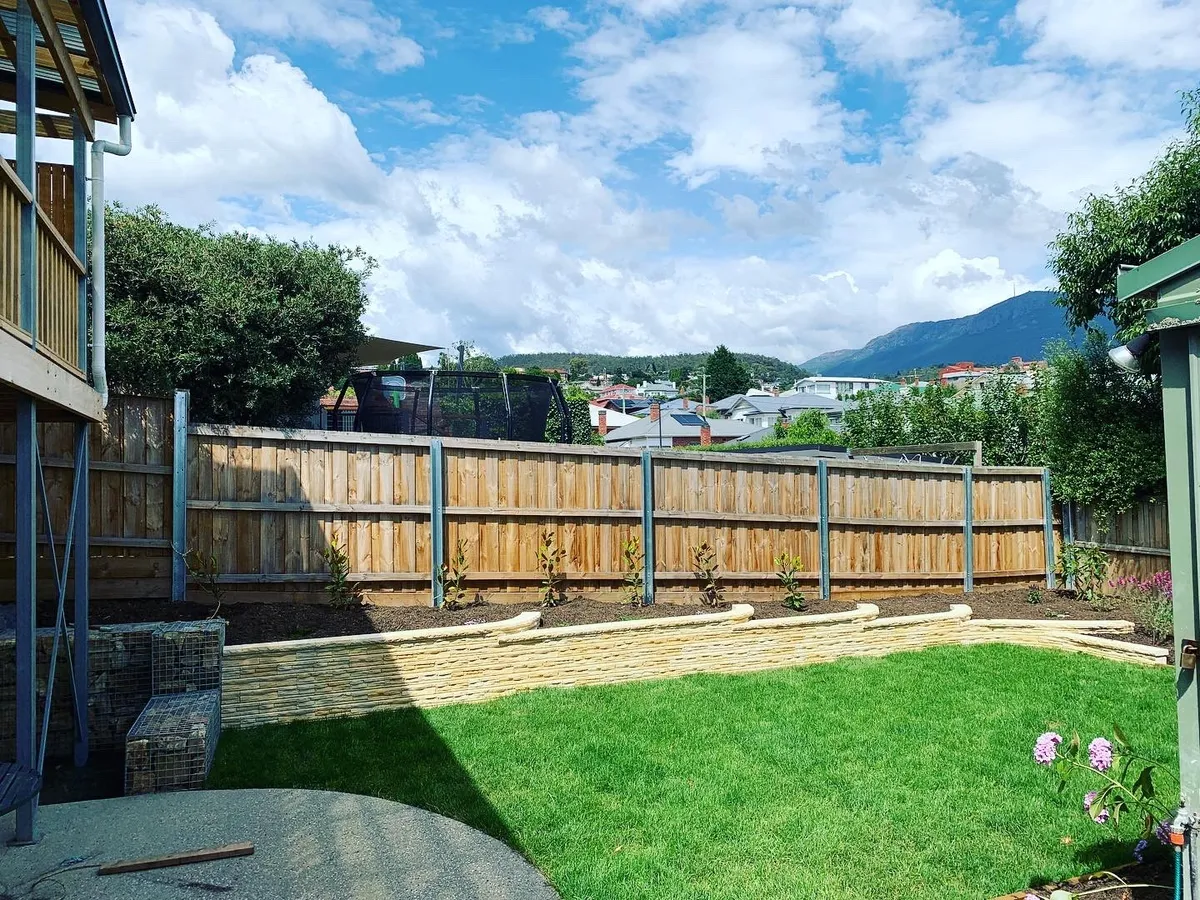
A lawn is only ever as good as what is underneath it. Natural or synthetic, the ground gets shaped, levelled and drained first, so the finished lawn looks sharp on day one and stays that way. Synthetic turf earns its place on high-wear areas, shaded spots and holiday properties that need to look good without the watering.
Ground preparation
This is the part of a turf job that decides everything and the part nobody sees. The area gets cleared out, the levels set with a fall that takes water away from the house rather than towards it, compacted ground ripped up, and drainage put in where the site needs it. Then quality topsoil at a depth the grass can actually root into, graded and rolled flat.
A lawn laid over the top of skipped preparation shows it within a year. It goes lumpy where the ground settles, thin where the soil is shallow, and boggy in the low corner nobody thought about.
New lawns
Natural turf gets chosen for your yard, mostly cool-season blends that suit the Hobart climate and stay green through winter. Shaded yards get a shade-tolerant mix. Yards that are going to take a football and a dog get something hard-wearing.
Turf is laid tight, rolled, and watered in properly on the day. I will leave you with straightforward instructions for the first six weeks, because that period is what decides whether it takes.
Synthetic turf
Synthetic has come a long way and there are places it is clearly the better answer. Small courtyards. Strips down the side of a house where grass never gets enough light. Slopes that are dangerous to mow. Rental and holiday properties. Anywhere the water bill or the mowing is the reason the lawn looks bad.
It still needs a proper base. A compacted, drained, screeded base under synthetic is what stops it rippling and sinking, and it is the same care as under natural turf.
Lawn restoration
Not every tired lawn needs replacing. Coring, top-dressing, over-seeding, weed control and a feeding program will bring back a lawn that is compacted or thin but sitting on decent ground. It costs a fraction of a new lawn and it is always worth checking before you rip one out.
Irrigation
A pop-up system or a set of sprinklers on a timer takes the guesswork out of the first summer and keeps a lawn even in the years after. Like drainage, it is cheap while the ground is open and awkward once the turf is down.
Lawn as part of the whole yard
On sloped Hobart blocks a usable lawn is often the reason for the retaining walls in the first place. Cutting a level terrace and holding it with a wall is what turns a bank into somewhere you can put a lawn at all, so the turf and the structural work get planned together.
Recent work
Turf and lawns I've built around Hobart
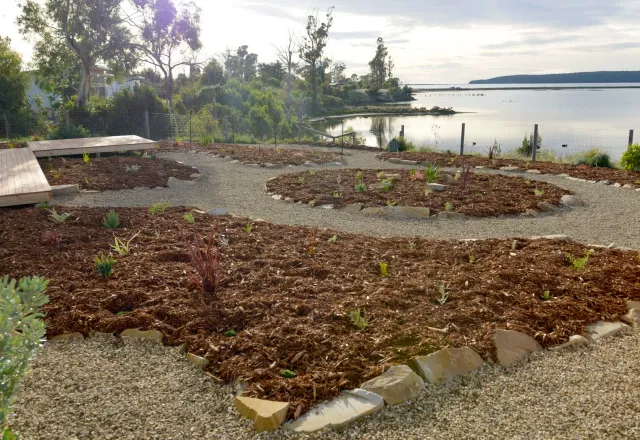
Waterfront Native Garden & Deck
Tasman Peninsula, TAS
Sweeping circular garden beds, gravel paths and a hardwood deck built on a bare waterfront block, looking straight over the water.
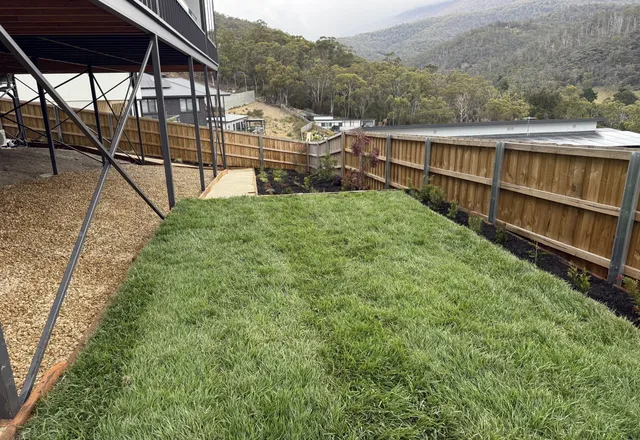
New-Build Backyard Transformation
Greater Hobart, TAS
A bare, sloping new-build block turned into terraced native gardens, fresh turf and clean paths with mountain views.
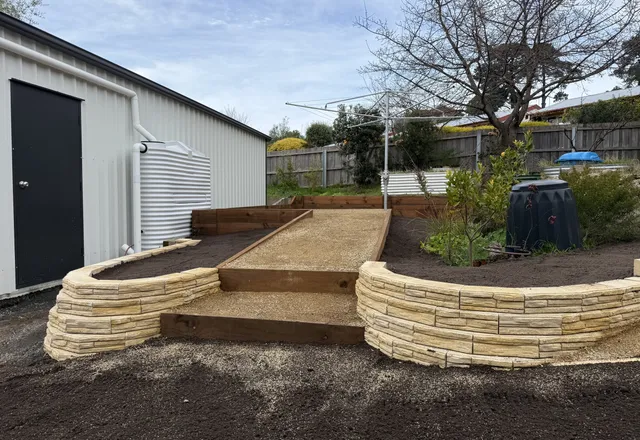
Sandstone Raised Garden Beds & Steps
Greater Hobart, TAS
Curved sandstone-block raised beds wrap around new timber steps and a gravel terrace in a levelled backyard.
Questions
Turf and lawns: common questions
What turf variety suits Hobart?
Cool-season grasses do the work here. A quality fescue or ryegrass blend handles our winters, stays green through the cold months and takes the shade a lot of Hobart yards have. The warm-season grasses that dominate on the mainland go brown and dormant through a Tasmanian winter, which is not what most people want to look at. I match the variety to how shaded and how used your yard is.
How much ground preparation does a new lawn need?
More than most people expect, and it is where the money should go. The area gets cleared, graded to a fall that moves water away from the house, ripped where it is compacted, drained if it needs it, then topsoiled and levelled. Turf laid straight onto scraped clay will look good for one season and be lumpy and patchy by the second.
Natural turf or synthetic?
Natural turf is cheaper up front, looks and feels better, and wants mowing and water. Synthetic costs more to install and then costs almost nothing. Synthetic earns its place on small courtyards, deep shade where nothing will grow, high-wear strips, steep spots that are miserable to mow, and holiday houses that need to look presentable with nobody there.
When should turf be laid?
Autumn and spring are the good windows here. The turf roots into warm ground without immediately facing summer heat. Summer laying works but the first six weeks need consistent water, so it is worth having irrigation in before the turf arrives.
Can you fix my existing lawn instead of replacing it?
Sometimes. If the problem is thatch, compaction, weeds or feeding, then coring, top-dressing, over-seeding and a fertiliser program will bring it back for a fraction of the cost. If the levels are wrong or it never drained, no amount of surface work fixes it and it is better to start again.
How long before we can walk on it?
Keep off it for about two to three weeks while the roots take, then light use. Full use, including kids and dogs, is better left until after the first couple of mows.
Where I work
Turf and lawns across greater Hobart, on both sides of the Derwent and out to Sorell. Not sure if I come to you?Get in touch. Travel is rarely a problem for the right job.
Other services
Ready to get started?
Free estimates across greater Hobart. Call, text or send through a few photos of your yard.