Services
Garden beds and planting in Hobart
I grew up in my family's native plant nursery on the Tasman Peninsula, so what goes in the ground is chosen for your site rather than picked off a shelf. Beds get built from the soil up.
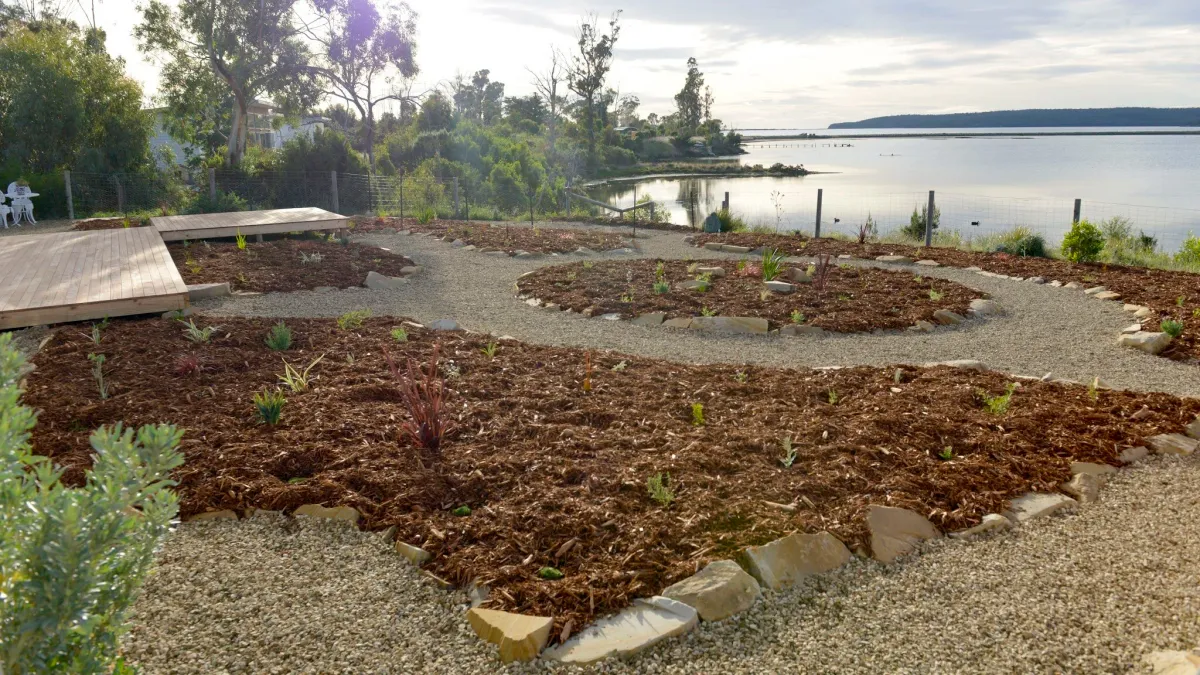
Growing up in a native plant nursery means plant selection isn’t guesswork. Beds are built from the soil up and planted with natives, exotics, edibles or a mix, chosen because they will actually thrive in your conditions.
Built from the soil up
A garden bed is a soil job before it is a planting job. Most disappointing beds were planted into ground that was never going to support them, and no amount of watering fixes that later.
Beds get the existing soil assessed first, then broken up, improved and fertilised for what is going into them. Where the soil is past saving, quality topsoil comes in. Then geofabric where it helps, then mulch at a depth that does something.
New beds, raised beds and restorations
New beds get shaped to the yard rather than run in straight lines against the fence, unless straight lines are what the design calls for. Raised beds in sandstone, block or timber suit sloped Hobart blocks, because they give you level growing ground and hold a bank at the same time.
Restoring old beds is often the better value job. Cutting back hard, digging out what has failed, feeding the soil and replanting the gaps costs less than starting again and keeps the established plants you would wait years to replace.
Planting chosen for your site
Aspect, soil, wind, frost and how much time you want to spend are what decide the plant list. A north-facing bed against a brick wall in Sandy Bay and a south-facing bank in Lenah Valley are completely different growing conditions in the same city.
I plant natives, exotics, edibles and herbs. Native planting brings in honeyeaters and handles our summers with the least fuss. Edible beds get positioned for the sun they need and the water they will want. Coastal blocks get species that will take the salt.
Irrigation while the beds are open
Dripline is cheap to lay while a bed is being built and expensive to retrofit through established planting. If a bed is going to want water, it goes in then, on a timer, so the first two summers do not depend on you remembering.
Staged around the seasons
Planting has a calendar and structural work does not. On bigger transformations the walls, levels and drainage go in whenever the job is running, and the planting gets timed for autumn or spring where we can, so plants go in when they will establish rather than when the truck happens to be there.
Recent work
Garden beds I've built around Hobart
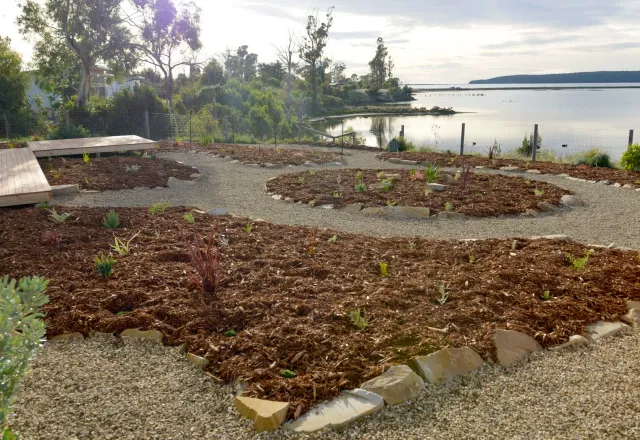
Waterfront Native Garden & Deck
Tasman Peninsula, TAS
Sweeping circular garden beds, gravel paths and a hardwood deck built on a bare waterfront block, looking straight over the water.
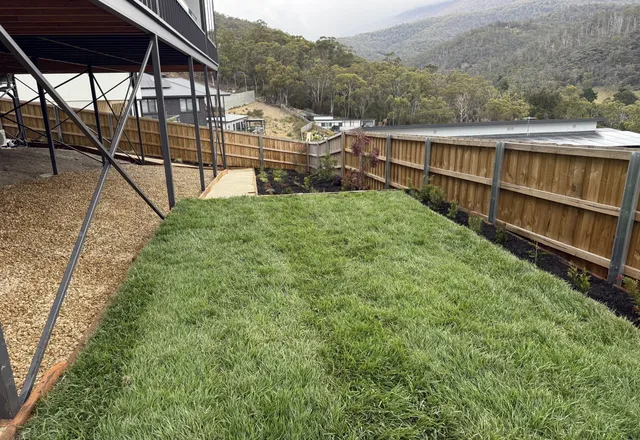
New-Build Backyard Transformation
Greater Hobart, TAS
A bare, sloping new-build block turned into terraced native gardens, fresh turf and clean paths with mountain views.
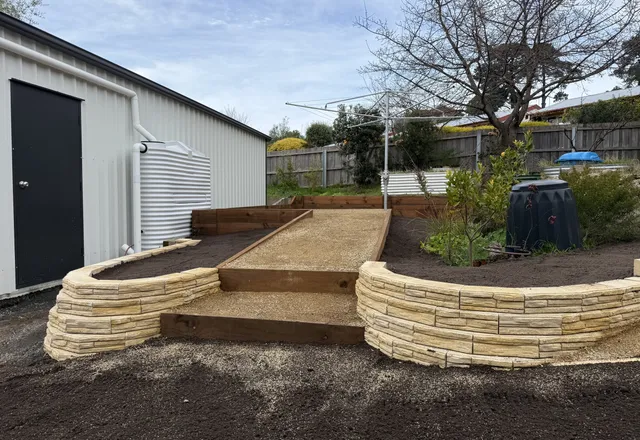
Sandstone Raised Garden Beds & Steps
Greater Hobart, TAS
Curved sandstone-block raised beds wrap around new timber steps and a gravel terrace in a levelled backyard.
Questions
Garden beds: common questions
Can you fix the soil I already have, or does it need replacing?
Usually it can be improved rather than replaced, which is cheaper. Old beds in Hobart are commonly compacted clay with no organic matter left in them. Breaking that up and working in compost and the right amendments gets most beds back. Where the soil is genuinely spent or full of builder's rubble, I bring in quality topsoil fertilised for what is going into it.
Native or exotic?
Both work, and plenty of good Hobart gardens are a mix. Natives cost less to keep alive here, handle the dry summers and bring birds in. Exotics give you the colour and the seasons a lot of people want. What matters more than the category is picking species that suit the aspect, soil and exposure you actually have.
When is the best time to plant in Hobart?
Autumn is the best window. The ground is still warm, the rain is coming, and plants get a whole cool season to put roots down before they meet a Tasmanian summer. Spring is the next best. Summer planting works but only with irrigation and a bit of attention.
Do the beds need irrigation?
It depends on the planting and how much you want to think about it. A native bed on a sheltered aspect will look after itself after the first year. Anything with edibles, exotics or a hot western aspect does much better on a dripline, and it costs very little to put in while the beds are open.
What about mulch and weeds?
Beds get geofabric where it earns its place, then mulch deep enough to actually suppress weeds and hold moisture. There are several mulch options and they look quite different, so you pick. Skimping on mulch depth is the most common reason a new bed is full of weeds by the second summer.
Can you restore an overgrown garden rather than start again?
Often yes, and it is worth asking. Established plants are worth keeping where they are healthy and in the right spot. I have taken on beds that looked like a write-off and got them back with a hard cut back, soil work, and replacing the third of the planting that was never going to come good.
Where I work
Garden beds across greater Hobart, on both sides of the Derwent and out to Sorell. Not sure if I come to you?Get in touch. Travel is rarely a problem for the right job.
Other services
Ready to get started?
Free estimates across greater Hobart. Call, text or send through a few photos of your yard.